
Brewhouse Systems ROI: What Impacts Payback Most




Brewhouse Systems ROI: Why payback rarely comes down to equipment price alone
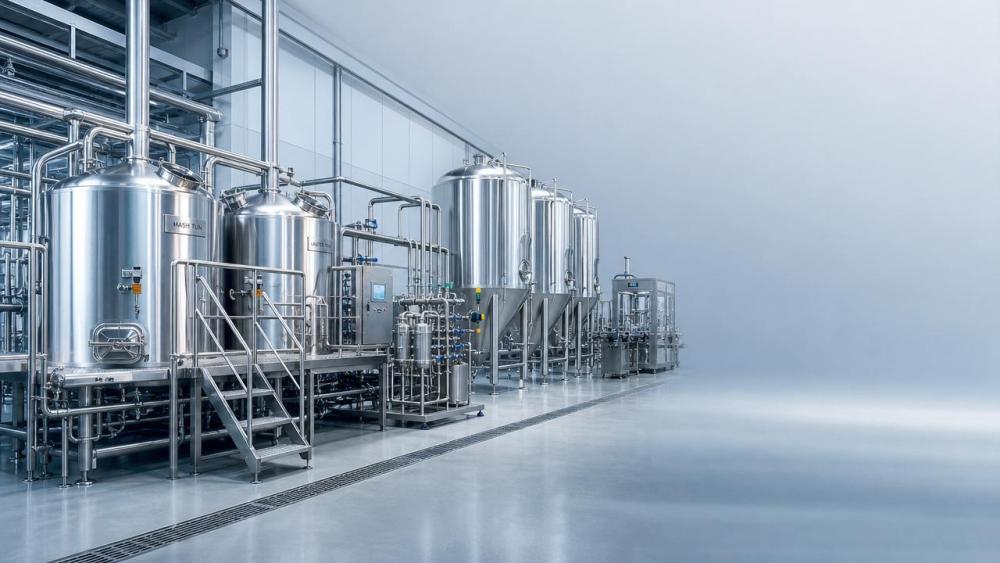
When teams compare brewhouse systems, the first number is usually CAPEX. The more decisive numbers appear later, inside output, yield, labor, utilities, sanitation, and uptime.
That is why two similarly priced systems can deliver very different payback periods. One runs smoothly at scale. The other creates hidden friction every week.
In practice, brewhouse systems sit at the center of a wider production chain. Fermentation control, CIP design, filling stability, and water quality all influence return.
BBPS tracks this full process logic closely. Its coverage of brewhouses, conical tanks, isobaric filling, and sanitary networks reflects a simple truth: ROI is operational before it is financial.
So what moves payback most? The short answer is throughput that can actually be sustained, not just promised on paper.
Which factors usually shorten ROI on brewhouse systems the fastest?
The fastest payback drivers are the ones that improve every batch. Wort yield, labor hours, steam use, water consumption, and changeover time matter immediately.
Among these, sustained throughput often has the largest impact. A brewhouse that adds one more reliable brew per day can change annual revenue math dramatically.
Yield is the second driver many buyers underestimate. A small gain in extract efficiency becomes a major savings when grain prices rise or recipes are malt-heavy.
Labor also reshapes the picture. Automated mash control, repeatable lautering, and easier CIP loops reduce manual interventions and free skilled operators for higher-value tasks.
Energy and water are not always the biggest line items, but they compound over time. Steam jacket efficiency, heat recovery, and better rinse management help protect margins.
More importantly, these gains are measurable. They are easier to defend in an approval case than vague claims about modernization.
A practical way to rank ROI drivers
The best starting point is not a brochure comparison. It is a short operational audit focused on batch economics and production bottlenecks.
Does higher automation always improve brewhouse systems ROI?
Not always. Automation improves ROI when it removes repeatable waste, stabilizes quality, or expands throughput without adding labor at the same rate.
If production volume is still modest and recipes change constantly, excessive automation may lengthen payback. The system becomes more capable than the site can monetize.
The more useful question is where automation creates financial leverage. Mash temperature control, valve sequencing, CIP repeatability, and data logging usually justify themselves sooner.
By contrast, highly customized control layers can increase service complexity. That matters if local technical support is limited or downtime costs are already painful.
In real projects, brewhouse systems perform best when automation matches plant maturity. Enough control to reduce variation. Not so much that troubleshooting becomes dependent on a specialist.
- Good automation lowers batch deviation and rework.
- Useful automation shortens CIP and changeover windows.
- Excessive automation can raise spare parts and software support costs.
- The strongest ROI appears when automation supports stable daily execution.
How much do sanitation and CIP design affect payback?
More than many budget models assume. Sanitation is not a side issue for brewhouse systems. It is one of the clearest links between engineering quality and financial return.
Poor CIP design increases chemical use, water waste, labor time, and contamination risk. Even one preventable spoilage event can erase a large share of expected savings.
This is why BBPS places so much attention on sanitary routing, ASME BPE thinking, and dead-leg avoidance. Hygienic design protects both flavor consistency and asset efficiency.
The strongest systems do not just clean thoroughly. They clean predictably. Repeatable CIP cycles make scheduling tighter, quality outcomes safer, and labor planning easier.
Needless to say, sanitation ROI is often indirect until something goes wrong. Then it becomes very direct and very expensive.
Warning signs worth checking before approval
- Piping layouts that create hard-to-clean corners or dead legs.
- Manual cleaning steps hidden inside an otherwise automated proposal.
- No clear data on cycle validation, spray coverage, or chemical concentration control.
- Limited integration between brewhouse systems and fermentation or filling sanitation routines.
Why do some brewhouse systems miss the expected payback window?
Most misses come from modeling errors, not from one dramatic failure. The forecast assumes ideal output, but the plant operates with real constraints.
A common example is upstream and downstream imbalance. The brewhouse can produce faster, but fermentation capacity, glycol stability, or packaging speed cannot keep pace.
Another issue is overestimating utilization. A system rated for high throughput only pays back quickly if demand, staffing, utilities, and maintenance readiness support that level.
There is also the quality side. If dissolved oxygen control, thermal precision, or sanitation discipline lag behind production goals, margin leaks appear through loss, rework, or shelf-life risk.
More often than not, the problem is not the brewhouse systems specification itself. The issue is treating the brewhouse as an isolated purchase instead of part of a fluid process chain.
What a more realistic payback model should include
A stronger model connects equipment capability with operating reality. That means testing the business case against several scenarios, not just the most optimistic one.
What should be compared first when choosing between brewhouse systems?
Start with operational fit, not headline capacity. Ask how each option performs under your recipe mix, sanitation routine, staffing model, and packaging rhythm.
Then compare the variables that change payback most: extract yield, brew length, utility draw, automation scope, CIP repeatability, and maintenance accessibility.
It also helps to review supplier thinking across the full beverage process. Groups that understand brewhouse systems together with fermentation, filling, and water treatment usually model ROI more accurately.
That broader process view is where intelligence platforms such as BBPS add value. They frame equipment decisions around thermal behavior, sanitary control, and throughput continuity, not just vessel size.
A useful next step is to build a side-by-side scorecard. Keep it simple, but make it evidence-based.
- Measure annual financial impact per batch improvement.
- Separate hard savings from quality-risk avoidance.
- Check whether support infrastructure matches the proposed brewhouse systems.
- Review how quickly the site can absorb automation and new SOPs.
So where should the evaluation go next?
The best payback cases are built from process facts. Price matters, but it should be judged against throughput reality, yield protection, sanitation discipline, and uptime resilience.
If the goal is to compare brewhouse systems with confidence, map the entire production path first. Include mashing, lautering, fermentation, CIP, utilities, and packaging.
From there, quantify three things clearly: how much more sellable output is possible, how much operating drag can be removed, and what risks are reduced.
That approach usually produces a stronger decision than chasing the lowest initial quote. It also leads to a payback estimate that survives real operating conditions.
A sensible next move is to compare two or three brewhouse systems using the same batch assumptions, utility data, CIP expectations, and downstream constraints.
When those inputs are aligned, the fastest path to ROI becomes much easier to see.
Related News
- 00
0000-00
Contamination Control in Fermentation: Building a CIP and Sampling Plan That Works - 00
0000-00
How to Evaluate a Keg Dispensing Systems Supplier for Multi-Tap Draft Operations - 00
0000-00
How Isobaric Filling Technology Protects Beer Carbonation and Reduces Oxygen Pickup - 00
0000-00
How to Specify Bottle Filling Lines for Carbonated Drinks Without Sacrificing Fill Accuracy - 00
0000-00
How to Specify Turnkey Brewery Automation for Consistent Batch Quality and Labor Savings
Tags
Weekly Insights
Stay ahead with our curated technology reports delivered every Monday.