
Beverage Processing Equipment Cost Drivers in 2026




Beverage Processing Equipment Cost Drivers in 2026
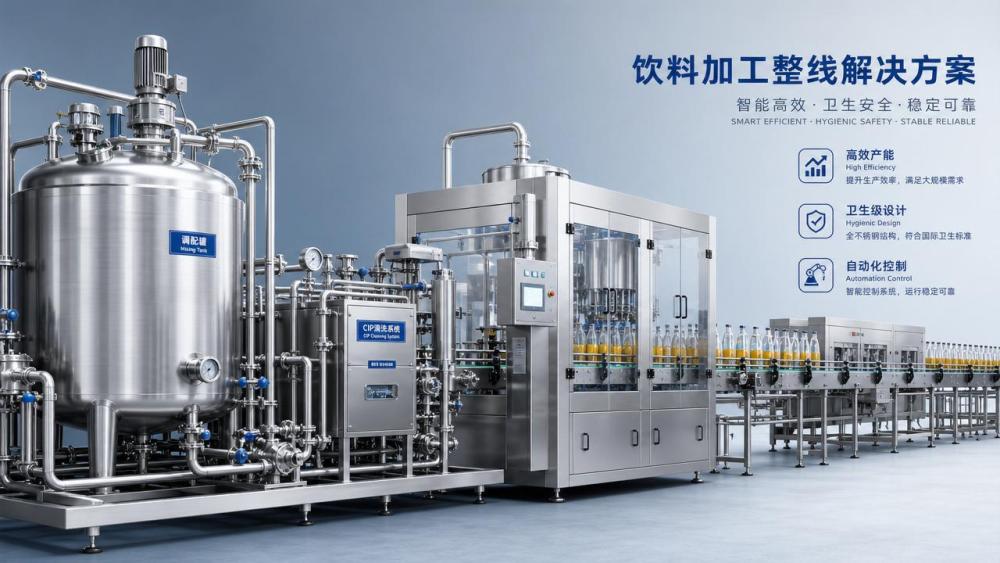
In 2026, beverage processing equipment pricing is no longer tied to stainless steel alone.
The bigger cost story comes from automation, sanitation, utilities, and output expectations.
That shift matters because capital decisions now face tighter payback scrutiny.
A lower quote can still create a higher total cost over five to ten years.
For beverage plants, the right question is not only, “What does the line cost?”
The better question is, “Which cost drivers will affect output, waste, compliance, and uptime?”
That is where beverage processing equipment decisions become financially defensible.
Why beverage processing equipment budgets are rising in 2026
From recent market shifts, one signal stands out.
Buyers are paying for precision, traceability, and sanitary assurance, not just metal and motors.
Modern beverage processing equipment must support stable flavor, faster changeovers, and lower contamination risk.
That adds sensors, control logic, better weld quality, and more validation work.
Energy systems also matter more than before.
Steam recovery, glycol efficiency, and optimized CIP cycles now influence procurement approval.
In practice, beverage processing equipment cost is becoming a full operational economics issue.
Five baseline pressures behind higher project values
- Higher sanitary design requirements for tanks, piping, and fill zones.
- Expanded automation for recipe control, alarms, and production data.
- Demand for better energy and water performance.
- Throughput targets that require fewer bottlenecks at peak runs.
- Lifecycle support expectations, including spare parts and remote diagnostics.
The biggest beverage processing equipment cost drivers
Not every line item has equal impact.
A few factors drive most of the budget movement in beverage processing equipment projects.
1. Automation depth
Manual systems may look cheaper at first.
Yet semi-automatic or fully automatic beverage processing equipment often lowers labor, giveaway, and inconsistency.
PLC architecture, HMI quality, batch tracking, and recipe management all raise upfront pricing.
They also make expansion easier later.
2. Sanitary compliance and validation
This is a major driver, especially in brewing, dairy drinks, teas, and functional beverages.
ASME BPE-influenced fabrication, hygienic valves, polished interiors, and dead-leg control add cost fast.
So do FAT, SAT, documentation packages, and cleaning validation support.
Still, weak sanitary design usually costs far more through recalls or downtime.
3. Throughput and speed targets
There is a steep pricing jump between moderate output and high-speed production.
High-capacity beverage processing equipment needs stronger frames, tighter controls, and better material handling.
Rotary fillers, depalletizers, conveyors, and pasteurization links must stay balanced.
A single under-sized section can erase the value of the rest.
4. Utility efficiency
Energy and water costs are now approval-level variables.
Brewhouse heat recovery, insulated vessels, variable-frequency drives, and optimized CIP skids can raise CAPEX.
But these features often improve ROI faster than expected.
5. Maintenance risk and spare parts strategy
Cheaper beverage processing equipment may rely on hard-to-source components.
That creates future delays during seal failures, valve issues, or control faults.
Projects should price downtime exposure, not only purchase price.
How different system types change total equipment cost
Not all beverage processing equipment categories behave the same way.
The main cost drivers vary by process stage.
This comparison helps explain why similar project sizes can produce very different quotes.
The real issue is how each system affects cost per packaged liter.
What to examine before approving a beverage processing equipment purchase
In actual projects, approval becomes easier when the review process is structured.
The goal is to separate visible price from full economic impact.
Use a practical checklist
- Check output assumptions against actual sales forecasts, not optimistic peak plans.
- Compare labor savings between manual, semi-automatic, and automatic beverage processing equipment.
- Review sanitary documentation, weld quality standards, and cleaning coverage.
- Calculate energy, water, CO2, and chemical usage by production volume.
- Ask for spare parts lists, service response terms, and controls component brands.
- Measure changeover time if multiple SKUs or package formats are planned.
A quote that looks aggressive can lose value quickly if these items are missing.
That is especially true for beverage processing equipment used in sanitary, carbonated, or fast-moving lines.
How BBPS helps reduce investment risk
BBPS focuses on the technical details that often decide financial outcomes later.
Its coverage spans brewhouse systems, conical fermenters, sterile isobaric filling lines, and CIP sanitary networks.
That matters because beverage processing equipment does not perform as isolated machines.
Performance depends on how thermal control, fluid handling, sanitation, and packaging work together.
BBPS also tracks sanitary compliance, throughput logic, and ROI signals across global beverage operations.
This makes vendor evaluation more concrete and less dependent on headline pricing alone.
Final take on beverage processing equipment cost planning
In 2026, beverage processing equipment cost will be shaped by system intelligence as much as hardware.
Automation depth, sanitary compliance, utility efficiency, and maintenance exposure now drive real project value.
The strongest decisions compare total ownership cost against stable throughput and product quality.
Before approving any beverage processing equipment investment, align the quote with operational risk, serviceability, and growth plans.
That approach turns procurement from price comparison into a long-term margin decision.
Related News
- 00
0000-00
Contamination Control in Fermentation: Building a CIP and Sampling Plan That Works - 00
0000-00
How to Evaluate a Keg Dispensing Systems Supplier for Multi-Tap Draft Operations - 00
0000-00
How Isobaric Filling Technology Protects Beer Carbonation and Reduces Oxygen Pickup - 00
0000-00
How to Specify Bottle Filling Lines for Carbonated Drinks Without Sacrificing Fill Accuracy - 00
0000-00
How to Specify Turnkey Brewery Automation for Consistent Batch Quality and Labor Savings
Weekly Insights
Stay ahead with our curated technology reports delivered every Monday.