
FDA Finalizes Brewery Yeast Validation Guidance




On July 12, 2026, the U.S. FDA finalized guidance on yeast propagation process validation in brewery operations, putting documented microbial stability, temperature-exothermy correlation modeling, and oxygen control validation at the center of compliance for yeast propagation systems under FDA jurisdiction. This is relevant not only to breweries serving the U.S. market, but also to equipment manufacturers, overseas suppliers, and Chinese OEMs producing Yeast Propagation & Dry Hopping systems for U.S. craft brewers, because the update points directly to how process documentation and system validation may now be scrutinized.
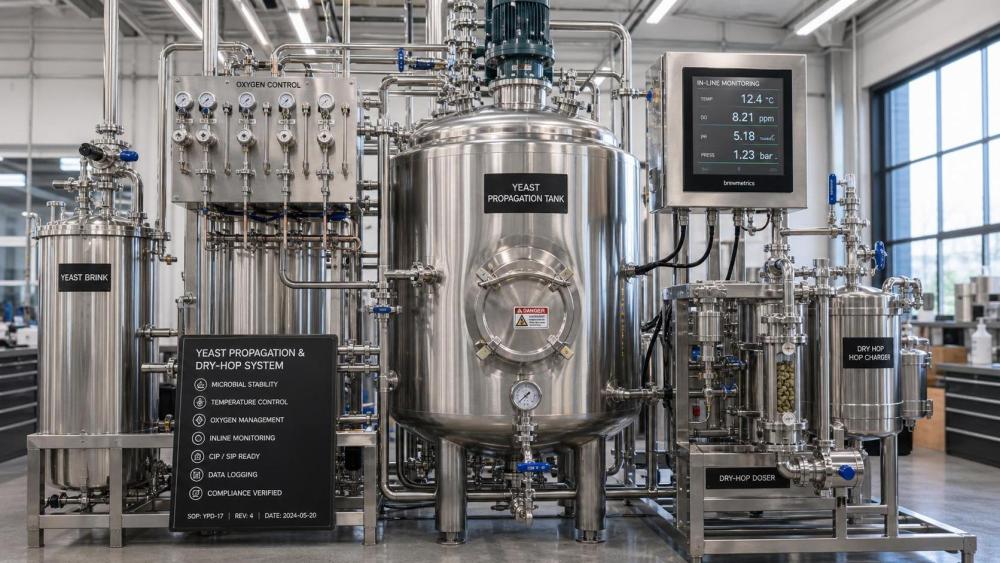
What the FDA Final Guidance Confirms
The confirmed development is the release, on 2026-07-12, of the FDA final guidance titled Yeast Propagation Process Validation in Brewery Operations (FDA-2026-GUIDE-08). According to the provided information, the guidance requires documented microbial stability, temperature-exothermy correlation modeling, and oxygen control validation for all yeast propagation systems used in facilities exporting to or operating under FDA jurisdiction.
The scope described in the input covers both domestic and foreign suppliers. It also explicitly includes Chinese OEMs manufacturing Yeast Propagation & Dry Hopping equipment for U.S. craft brewers.
Where the Pressure Points May Appear Across the Supply Chain
Breweries shipping into or operating under FDA jurisdiction
From an industry perspective, breweries are the most immediate operational touchpoint because the guidance addresses yeast propagation systems used in facilities tied to FDA oversight. The likely impact is concentrated in validation records, process controls, and the ability to show that microbial stability, thermal behavior, and oxygen control have been documented in a manner consistent with the new guidance.
Equipment manufacturers and system integrators
Analysis shows that suppliers of yeast propagation systems may face closer technical review from brewery customers. The practical effect may appear in equipment specifications, validation support documents, control logic explanations, and commissioning-related materials, especially where customers need evidence tied to microbial stability, heat generation behavior, and oxygen management.
Foreign OEMs serving U.S. craft brewing customers
Observably, the cross-border implication is one of the clearest parts of this update. Because the guidance applies to foreign suppliers as described in the input, Chinese OEMs and other overseas manufacturers may need to pay closer attention to whether their equipment packages, technical files, and customer-facing validation materials align with what U.S.-bound buyers now expect.
Procurement and supply-chain coordination teams
For procurement, sourcing, and delivery teams, the issue is less about the headline and more about execution risk. What deserves closer attention is whether equipment orders, supplier documentation, handover packages, and customer acceptance criteria now need to reflect these validation-related expectations more explicitly than before.
What Companies Should Review Now
Check how validation evidence is organized
Companies involved in brewery operations or equipment supply should review whether existing files clearly cover the three elements named in the guidance: microbial stability, temperature-exothermy correlation modeling, and oxygen control validation. The core issue is not generic quality language, but whether documentation is structured around the specific validation topics identified in the FDA text provided.
Separate regulatory wording from practical deliverables
Analysis shows that one near-term challenge will be translating regulatory language into engineering and customer-delivery requirements. Businesses may need to determine which documents belong in regulatory files, which belong in technical handover packages, and which should be prepared for customer review during procurement or acceptance discussions.
Reassess supplier and customer communication
For breweries, OEMs, and service providers, customer communication may become more detailed around validation scope and responsibilities. That can affect quotations, technical discussions, project timelines, and clarification of who is expected to provide supporting records for process validation and system performance.
Watch for follow-up interpretation
Because this is a finalized guidance, companies should pay attention to whether downstream market practice changes in response, including how customers, import-facing teams, and compliance personnel interpret the FDA requirements in day-to-day transactions. The distinction between the published guidance itself and how buyers operationalize it will matter.
Why This Looks Like More Than a Passing Update
Observably, this development is not just a routine wording change. The guidance identifies three specific validation dimensions, which suggests a more defined compliance frame around yeast propagation systems than a broad, principle-only statement would. That said, based on the information provided, it would be premature to treat this as a fully measurable market shift with fixed commercial outcomes.
It is more appropriate to understand this as a clear regulatory signal with immediate documentation implications and possible medium-term effects on procurement, technical review, and supplier selection. Continued attention is warranted because the cross-border scope means the response will not be limited to U.S.-based breweries alone.
How the Market May Best Read This Development
At this stage, the industry significance lies in specificity. The FDA has not merely referenced brewery process control in general terms; it has finalized guidance that names documented microbial stability, temperature-exothermy correlation modeling, and oxygen control validation as required areas for covered yeast propagation systems. For industry participants, the most balanced reading is that this is a concrete compliance signal with operational consequences, while some business impacts will still depend on how the guidance is applied in actual projects and customer requirements.
Basis of This Article and What Still Needs Verification
This article is based on the user-provided news title, event date, and event summary concerning the FDA final guidance on yeast propagation process validation in brewery operations. For this type of industry update, source categories typically worth checking include official regulatory notices, company statements, industry association updates, authoritative media coverage, and standards-related documents.
No specific official source link was provided in the input, so the exact source document link still requires follow-up verification. Continued observation should focus on any subsequent official clarification, downstream customer implementation practices, and how affected suppliers and breweries adjust their documentation and validation workflows.
Related News
- 00
0000-00
Contamination Control in Fermentation: Building a CIP and Sampling Plan That Works - 00
0000-00
How to Evaluate a Keg Dispensing Systems Supplier for Multi-Tap Draft Operations - 00
0000-00
How Isobaric Filling Technology Protects Beer Carbonation and Reduces Oxygen Pickup - 00
0000-00
How to Specify Bottle Filling Lines for Carbonated Drinks Without Sacrificing Fill Accuracy - 00
0000-00
How to Specify Turnkey Brewery Automation for Consistent Batch Quality and Labor Savings
Weekly Insights
Stay ahead with our curated technology reports delivered every Monday.