
Seoul Food Fair Signals New Brewing Equipment Rules




At the 2026 Seoul International Food Show, held from June 9 to 12, the closing takeaway for brewing equipment suppliers was not only buyer interest but also a regulatory signal: preparations have started for a China-Korea mutual recognition whitelist mechanism for brewing equipment. Against that backdrop, strong attention to RO brewing water systems and fully automatic CIP stations suggests that exporters, buyers, certification-related service providers, and after-sales teams may need to pay closer attention to technical documentation, remote verification readiness, and future procurement compliance expectations.
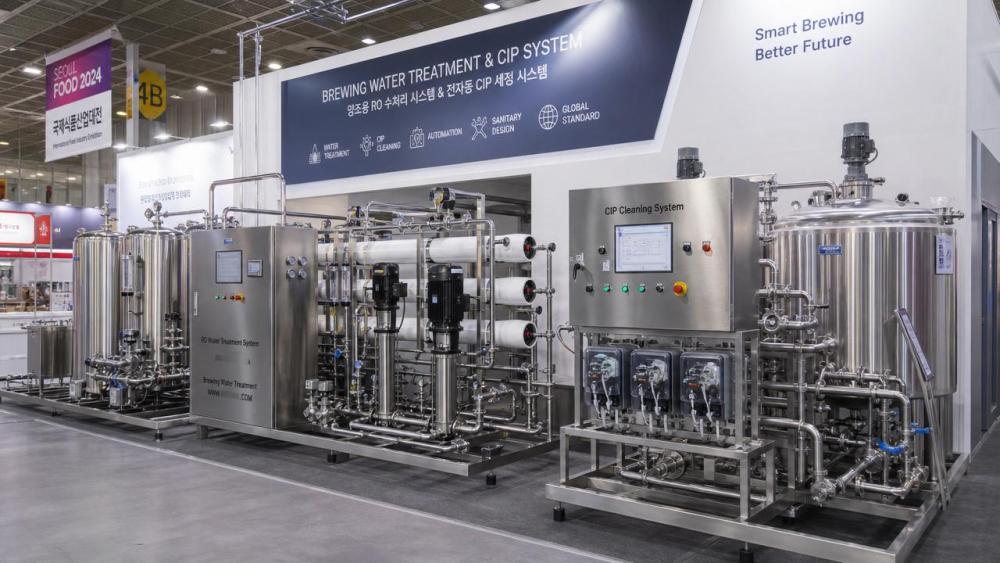
What the exhibition confirmed
From June 9 to 12, the China Alcoholic Drinks Association brought 12 equipment companies to the 2026 Seoul International Food Show. The RO Brewing Water Systems and Fully Automatic CIP Stations area received more than 1,800 visits from buyers from Korea, Japan, and Vietnam. Order interest focused on 3-5 tons per hour reverse osmosis systems with online TOC monitoring and dual-station fully automatic CIP stations supporting ASME BPE remote verification. The Korea Alcoholic Beverage Industry Association has started preparations for a China-Korea mutual recognition whitelist mechanism for brewing equipment.
Why the compliance signal matters across the chain
For export-facing equipment suppliers
Analysis shows that the most immediate impact is on suppliers targeting cross-border brewing projects. If a mutual recognition whitelist moves forward, product acceptance may become more closely tied to how clearly a supplier can demonstrate conformity in equipment design, monitoring capability, and verification records. What deserves closer attention is not only product performance, but whether technical files, inspection records, and validation-related materials are organized in a way that can support buyer review and future recognition procedures.
For breweries and procurement teams
From an industry perspective, buyer interest in online TOC monitoring and ASME BPE remote verification support points to a procurement shift toward auditable and document-ready systems. Procurement teams may therefore need to look beyond price and capacity, and examine whether bidding documents, equipment specifications, commissioning records, and supplier qualification materials can satisfy stricter review expectations if whitelist-based recognition or similar screening mechanisms take shape.
For certification, testing, and service participants
Observably, certification-related companies, testing service providers, and after-sales organizations could be affected through the documentation and execution side of projects. Where buyers increasingly focus on monitoring functions and verification compatibility, supporting actors may need to prepare for more requests around test evidence, traceability records, remote review support, and service documentation linked to installation, cleaning validation, or system handover.
What companies should watch next
Keep technical files ready for review
Analysis shows that suppliers in the highlighted product categories should pay close attention to whether product specifications, TOC monitoring descriptions, verification support materials, and equipment configuration records are complete and consistent. The current signal does not confirm a finalized execution framework, but it does suggest that document readiness could become more important in future tenders or buyer qualification reviews.
Track how mutual recognition language evolves
What deserves closer attention is the wording and scope of the proposed whitelist mechanism. Since the input only confirms that preparations have started, companies should not treat it as an already implemented market-access rule. It is more appropriate to monitor subsequent official wording, association notices, procurement requirements, and any changes in acceptance criteria that may affect product entry or project approval.
Review delivery and service commitments
From an industry perspective, systems such as RO water treatment units and fully automatic CIP stations often involve installation, validation support, and post-delivery coordination. Exporters and service partners may therefore need to review how delivery documents, commissioning support, remote verification capability, and after-sales response are presented to buyers, especially where procurement decisions increasingly reward compliance visibility rather than equipment supply alone.
Prepare for specification-based competition
Observably, the concentration of interest in defined capacity ranges and named technical functions suggests that future competition may center more on specification alignment and reviewability. Companies should pay attention to whether tender documents, customer checklists, or qualification requests begin to emphasize monitored water quality indicators, verification support, or evidence packages tied to standards-based purchasing decisions.
How this signal should be read for now
Analysis shows that this development is better understood as an execution signal rather than a completed rule change. The exhibition demand pattern highlights where buyers are already placing compliance-sensitive attention, while the preparation of a mutual recognition whitelist points to a possible future framework for screening or recognition. At this stage, the market does not yet have enough confirmed detail to treat the mechanism as a settled access standard, so continued observation remains necessary.
A measured takeaway for the market
For the brewing equipment sector, the main significance of this event lies in the combination of commercial interest and early rule-shaping signals. Strong buyer attention to systems with online monitoring and remote verification support indicates that compliance-related features are becoming more visible in procurement decisions. It is more appropriate to understand this news as an early indicator of how cross-border acceptance and supplier evaluation may evolve, rather than as proof that a fully defined new regime is already in force.
Basis of this article and what still needs verification
This article is generated from the user-provided news title, event date, and event summary. For events of this type, relevant source categories usually include official announcements, regulator releases, customs or trade authority information, industry association updates, standards organization documents, and reporting by authoritative trade media. No specific official source link was provided in the input, so subsequent verification is still needed. What remains worth tracking includes any detailed rules behind the proposed whitelist mechanism, certification and acceptance interpretations, changes in tender documentation, industry feedback, and how participating companies respond in actual project execution.
Related News
- 00
0000-00
Contamination Control in Fermentation: Building a CIP and Sampling Plan That Works - 00
0000-00
How to Evaluate a Keg Dispensing Systems Supplier for Multi-Tap Draft Operations - 00
0000-00
How Isobaric Filling Technology Protects Beer Carbonation and Reduces Oxygen Pickup - 00
0000-00
How to Specify Bottle Filling Lines for Carbonated Drinks Without Sacrificing Fill Accuracy - 00
0000-00
How to Specify Turnkey Brewery Automation for Consistent Batch Quality and Labor Savings
Weekly Insights
Stay ahead with our curated technology reports delivered every Monday.