
RO Brewing Water System Quotes Rise 8–12%




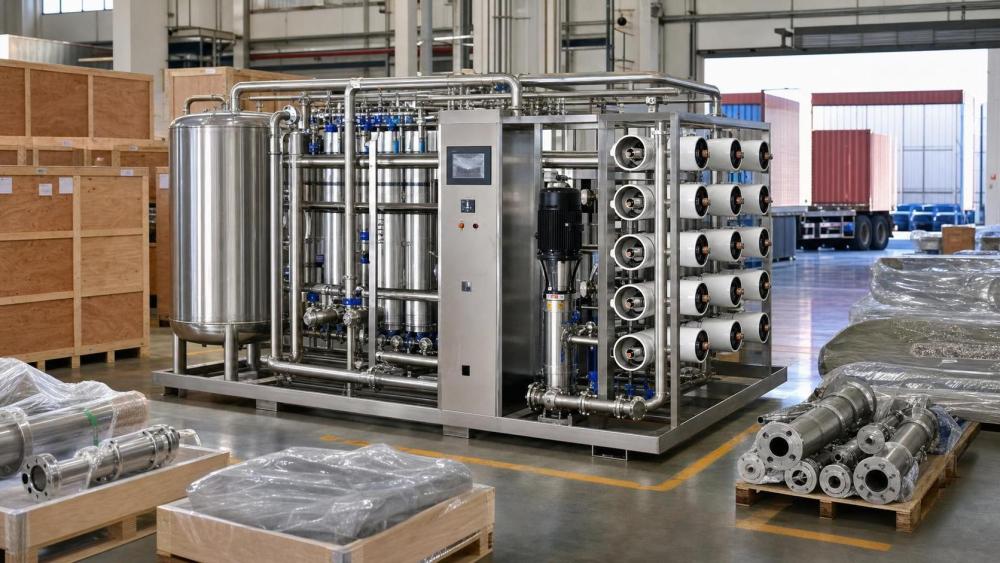
The timing of the event is not explicitly stated in the source input, but the update indicates that since June 2026, Chinese manufacturers of RO Brewing Water Systems have broadly raised export quotations by 8–12% and extended standard delivery times from eight weeks to 12–14 weeks. For exporters, overseas buyers, project procurement teams, and compliance-sensitive end users, this is worth close attention because the change links pricing, lead times, membrane sourcing, and certification readiness in the same supply chain signal.
What has been confirmed so far
According to the provided information, the latest change is tied to tighter export controls affecting high-end RO membranes supplied to China from the United States, Japan, and South Korea, including products associated with Dow, Toray, and Shin-Etsu. Since June 2026, domestic manufacturers of RO Brewing Water Systems have generally notified overseas customers of export price increases in the 8–12% range.
The same update states that standard delivery cycles have been extended from eight weeks to 12–14 weeks. In parallel, several leading suppliers have started validation work on domestic membrane substitutes, but these alternatives have not yet obtained ASME BPE or NSF/ANSI 61 certification.
Where the pressure is likely to be felt first
Export quotations and contract timing
From an industry perspective, exporters and direct trade businesses are likely to face the most immediate pressure in quotation management and contract execution. A simultaneous increase in price and lead time affects not only margin calculations, but also how suppliers communicate validity periods, production windows, and delivery commitments to overseas customers.
Procurement and project planning risk
Buyers, project procurement teams, and system integrators may be affected in planning and scheduling. When standard lead times move from eight weeks to 12–14 weeks, purchasing decisions, installation sequencing, and acceptance timelines may all need reassessment. What deserves closer attention is whether procurement documents, technical confirmations, and customer expectations still align with the revised delivery reality.
Compliance-sensitive applications
For businesses serving applications where certification matters, the domestic substitution process deserves particular attention. Analysis shows that validation alone does not resolve market access or customer acceptance questions if replacement membranes have not yet obtained ASME BPE or NSF/ANSI 61 certification. This may affect specification approval, documentation review, and final customer sign-off in some export scenarios.
Supply-chain service coordination
Supply-chain service providers and related coordination teams may also feel the impact through scheduling uncertainty. Even without adding unverified details, the confirmed extension in standard delivery time suggests a greater need for closer coordination around order confirmation, production planning, shipment timing, and customer communication.
What companies should watch now
Changes in official wording and compliance interpretation
Companies should closely watch whether there are further official changes in how export controls are described or implemented in practice. Observably, the current signal is not only about cost, but also about whether sourcing constraints translate into longer-term compliance and substitution questions for membrane components.
Differences between substitution progress and market usability
What deserves closer attention is the gap between starting validation and achieving commercial readiness. Suppliers may begin testing domestic alternatives, but for many transactions the practical issue is whether the substitute can be supported by the certifications, technical documents, and customer-facing materials required in the target market.
Delivery commitments and customer communication
For sales teams and project managers, delivery communication now becomes a core operational issue. Analysis shows that the move from an eight-week norm to a 12–14 week norm can affect order confirmation language, milestone planning, and expectations management with overseas customers. The practical focus should be on clear lead-time disclosure and realistic fulfillment commitments.
Supplier qualification and document readiness
Companies relying on membrane-related sourcing should review supplier qualification status and supporting documentation more carefully. In the current context, certification status, technical records, and any changes in component origin may become more important in procurement review and client approval processes.
Why this matters beyond a single price adjustment
Analysis shows that this update should not be read only as a short-term export quote revision. It also points to a broader stress point in the RO Brewing Water Systems supply chain: dependence on imported high-end membrane inputs can affect price, delivery, and certification at the same time. That combination is more significant for the market than a standalone cost increase.
At the same time, it is too early to treat domestic substitution as a completed solution. Observably, validation activity is underway, but the lack of ASME BPE or NSF/ANSI 61 certification means the outcome remains subject to further verification in actual export business and customer acceptance scenarios.
How this update is best understood at this stage
At this stage, it is more appropriate to understand the development as both an immediate operational change and a continuing industry signal. The confirmed facts already affect quotations and delivery expectations, while the substitution path still requires further observation. For the industry, the key significance lies in how membrane sourcing constraints may continue to shape export competitiveness, compliance handling, and fulfillment reliability.
Basis of this article and what still needs verification
This article is based on the user-provided news title, event timing description, and event summary. The specific official source link was not provided in the input, so further verification is still needed through channels commonly relevant to this type of update, such as official notices, company announcements, industry association information, authoritative media reporting, and documentation from standards organizations.
Follow-up attention should remain on whether there are additional official statements, whether delivery adjustments continue, and whether domestic substitute membranes subsequently obtain ASME BPE or NSF/ANSI 61 certification.
Related News
- 00
0000-00
Contamination Control in Fermentation: Building a CIP and Sampling Plan That Works - 00
0000-00
How to Evaluate a Keg Dispensing Systems Supplier for Multi-Tap Draft Operations - 00
0000-00
How Isobaric Filling Technology Protects Beer Carbonation and Reduces Oxygen Pickup - 00
0000-00
How to Specify Bottle Filling Lines for Carbonated Drinks Without Sacrificing Fill Accuracy - 00
0000-00
How to Specify Turnkey Brewery Automation for Consistent Batch Quality and Labor Savings
Weekly Insights
Stay ahead with our curated technology reports delivered every Monday.