
Brewery Water Treatment: RO Specs That Affect Beer Quality




Brewery Water Treatment: Why RO Specs Shape Beer Quality
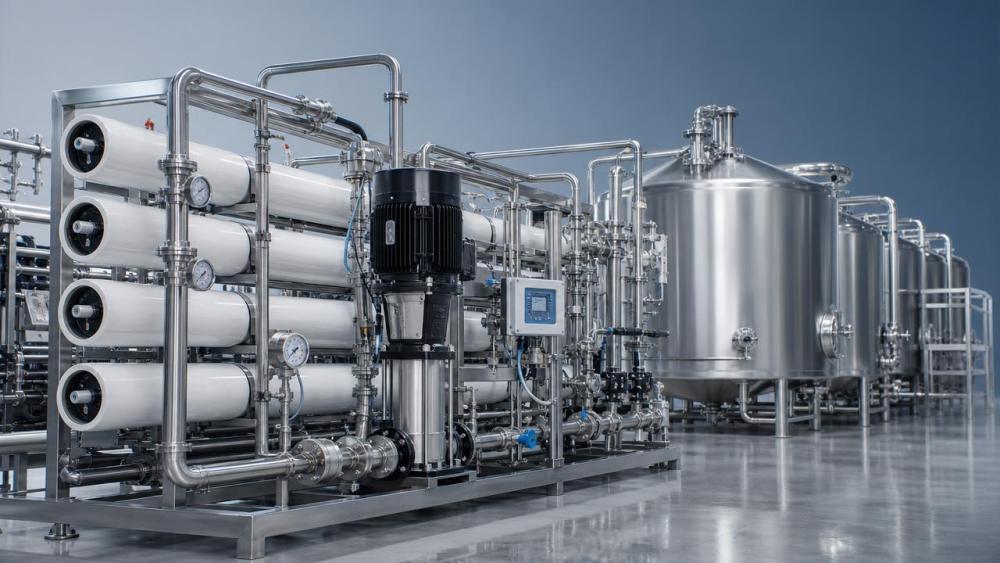
In brewing, water is never just background utility. It drives flavor expression, mash behavior, fermentation stability, and package consistency.
That is why brewery water treatment deserves the same attention as brewhouse controls, cellar temperatures, and dissolved oxygen management.
Among all treatment methods, reverse osmosis often becomes the foundation. It gives brewers a clean, repeatable starting point.
Still, not every RO system supports great beer. The technical details behind recovery, rejection, flow stability, and sanitation matter more than the label.
Good brewery water treatment removes harmful variability. Great brewery water treatment also preserves process control and makes mineral adjustment predictable.
If RO specifications are poorly matched, the result can show up everywhere. Mash pH drifts. Yeast stress increases. Hop brightness softens. Finished beer loses precision.
So the real question is simple. Which RO specs actually affect beer quality, and how should they be evaluated in daily brewery operation?
The Main Job of RO in Brewery Water Treatment
RO removes dissolved salts, hardness, chlorine-related compounds, and many source-water contaminants that interfere with brewing performance.
This creates low-mineral water that can be rebuilt for different beer styles. That flexibility is one reason brewery water treatment often starts with RO.
For pale lagers, hazy IPAs, crisp pilsners, and dark ales, the ideal ion profile changes. Calcium, sulfate, chloride, magnesium, and alkalinity all need control.
Without a stable RO baseline, mineral additions become guesswork. Even small source-water shifts can create noticeable flavor and process differences.
That is especially important for breweries chasing repeatability across seasons, batches, shifts, or multiple production sites.
RO Specs That Directly Influence Beer Quality
1. Salt Rejection Rate
Salt rejection tells you how effectively the membrane removes dissolved ions. In brewery water treatment, this is one of the most important quality indicators.
Low or unstable rejection allows hardness and alkalinity to slip through. That can shift mash pH and reduce the accuracy of water profile adjustment.
When rejection performance drops, operators may notice muted hop definition, rough bitterness, or inconsistent fermentation performance before they see analytical alarms.
2. Permeate Conductivity
Permeate conductivity is a practical daily signal. It shows whether treated water is staying within the expected purity range.
A sudden increase often means membrane fouling, seal failure, feed-water change, or pretreatment problems. Any of these can impact brewery water treatment performance fast.
For brewing teams, conductivity trends are often more useful than isolated lab numbers because they reveal drift before beer quality moves off target.
3. Recovery Rate
Recovery rate measures how much feed water becomes usable permeate. Higher recovery sounds efficient, but pushing it too hard creates scaling risk.
Once scaling starts, membrane performance falls. Flow drops, conductivity rises, and cleaning frequency increases. Beer quality suffers through inconsistency, not just impurity.
A balanced recovery target supports both utility savings and reliable brewery water treatment. Over-optimization usually costs more later.
4. Flow Stability and Peak Demand Capacity
RO water quality means little if supply volume collapses during brewing peaks. Mashing, dilution, packaging, and CIP can create overlapping demand.
When flow is undersized, teams blend untreated water, delay production, or accept unstable tank levels. Each workaround adds quality risk.
Proper brewery water treatment sizing should match real operating peaks, not ideal average consumption.
5. Membrane Material and Sanitary Design
Beer plants do not run in a generic utility environment. They run inside strict hygienic systems where dead legs, warm tanks, and stagnant loops create contamination risks.
RO skids used in brewery water treatment should support sanitary operation, cleanable piping, proper drainability, and suitable materials for beverage production.
If treated water becomes microbiologically unstable after the membrane, flavor consistency and shelf life can be compromised downstream.
How RO Specs Affect Brewing Stages
Mash and Lauter Performance
Excess alkalinity can fight against desired mash pH. That reduces enzyme efficiency and can affect extract yield, wort clarity, and tannin pickup.
With consistent brewery water treatment, mash adjustments become smaller and more reliable. That usually means smoother brewhouse control and cleaner sensory results.
Boil, Hop Expression, and Flavor Balance
Sulfate and chloride ratios shape bitterness perception, fullness, and finish. If the RO baseline is unstable, the intended flavor balance can drift.
This is where brewery water treatment becomes a sensory tool, not only a utility function. The membrane supports recipe precision.
Fermentation and Yeast Health
Yeast needs a controlled mineral environment. Too much residual sodium, hardness, or alkalinity can stress metabolism and shift flavor development.
Stable brewery water treatment helps keep fermentation curves predictable. That matters for attenuation, ester expression, sulfur reduction, and batch repeatability.
Dilution Water and Final Package Stability
High-gravity brewing and post-filtration dilution demand very clean water. Off-spec RO water can flatten flavor or introduce subtle instability into finished beer.
At this point, brewery water treatment touches the final package directly. There is little room for correction after filling.
What Operators Should Monitor Every Day
The strongest RO specification on paper still needs disciplined operation. Daily monitoring keeps brewery water treatment aligned with real brewing conditions.
- Track feed pressure, differential pressure, and permeate flow.
- Record permeate conductivity every shift, not only during maintenance checks.
- Compare actual recovery against the design window.
- Verify pretreatment performance for chlorine, hardness, and suspended solids.
- Inspect storage tanks and loops for sanitation weak points.
- Confirm mineral dosing accuracy after RO treatment.
These steps are not overkill. They are usually the fastest way to catch a water issue before it turns into a beer issue.
Common RO Mistakes in Brewery Water Treatment
A common mistake is buying by capacity alone. A big skid does not guarantee stable rejection, sanitary design, or useful control visibility.
Another mistake is ignoring source-water variability. Seasonal shifts can overload pretreatment and change RO behavior without obvious warning signs.
Some breweries also run membranes too long between cleanings. Short-term savings can lead to long-term flavor inconsistency and premature membrane replacement.
And in fast-growing sites, expansion often outruns utility planning. Brewery water treatment then becomes the hidden bottleneck behind brewhouse and packaging performance.
A Practical Checklist for Selecting RO Specs
- Define target permeate conductivity based on the beer portfolio and mineral rebuild strategy.
- Match recovery rate to source-water scaling risk, not only wastewater reduction goals.
- Size permeate flow for overlapping brew, cellar, packaging, and CIP demand.
- Require clear data points for rejection, pressure trend, and alarm history.
- Review sanitary details for tanks, piping, vents, and post-RO distribution loops.
- Plan membrane cleaning and replacement intervals around actual operating load.
- Validate the system with recipe-specific water profiles, not generic utility acceptance tests.
This approach makes brewery water treatment decisions easier to defend. It ties utility specifications directly to beer quality outcomes.
Final Takeaway
The best brewery water treatment strategy starts with clarity about what the beer needs. RO is valuable because it removes uncertainty.
But membrane choice, rejection stability, recovery setting, sanitary design, and real operating control determine whether that promise becomes consistent beer quality.
When brewery water treatment is specified well, the whole process gets easier. Mash control sharpens, fermentation steadies, flavor stays true, and packaged beer holds its intended character.
That is the practical value of choosing the right RO specs. You are not only treating water. You are protecting the beer from the first tank to the final pour.
Related News
- 00
0000-00
Contamination Control in Fermentation: Building a CIP and Sampling Plan That Works - 00
0000-00
How to Evaluate a Keg Dispensing Systems Supplier for Multi-Tap Draft Operations - 00
0000-00
How Isobaric Filling Technology Protects Beer Carbonation and Reduces Oxygen Pickup - 00
0000-00
How to Specify Bottle Filling Lines for Carbonated Drinks Without Sacrificing Fill Accuracy - 00
0000-00
How to Specify Turnkey Brewery Automation for Consistent Batch Quality and Labor Savings
Weekly Insights
Stay ahead with our curated technology reports delivered every Monday.